
Sensitivity Was Never the Problem
A reflection on sensitivity as the raw form of emotional intelligence, and how learning to regulate it can turn overwhelm into clarity and grounded presence.


When Sensitivity Was Labeled Fragile
Most of us grow up being taught certain ideas, sometimes by our families, sometimes by the environments we’re shaped by. You need to be stronger. More solid. Less sensitive. In control. Because the belief we’re taught is simple. Being sensitive means being fragile.
Over time, this belief settles quietly into us. We stop questioning it. We start monitoring ourselves. We learn which parts of us feel “too much” and which reactions should be hidden or toned down. But what if that belief was never true?
Actually, sensitivity isn’t a weakness. It’s being attuned to your inner world.
It’s the ability to connect what happens on the surface with what’s unfolding underneath. It means not only feeling your own emotions, but also sensing the emotional states of others and understanding them.
This is why it often pulls us away from shallow relationship dynamics and toward deeper forms of connection. It creates a natural curiosity for what’s real, what’s unspoken, what’s felt but not yet named.
In many ways, sensitivity is emotional intelligence in its purest, unprocessed form.
It brings awareness to what we feel, to the impact those feelings have on us, and to how others experience their own emotions.
Sometimes a person may appear calm, socially skilled, or emotionally intelligent. But that composure is often performance rather than presence. Someone disconnected from their emotional world isn’t emotionally intelligent. They’ve simply learned to wear a mask in order to be accepted.
And in truth, most of us wear masks at times. Because society teaches us that hiding can feel safer than being fully seen. But when sensitivity is understood and regulated, it becomes a powerful source of strength.
When emotional regulation and discernment are developed, sensitivity stops being something fragile and reveals itself as a tool for understanding the emotional ecosystem we move through.
Before Emotional Intelligence Has a Name
Being sensitive doesn’t mean feeling emotions more intensely. It simply means feeling. It’s sensing what isn’t spoken. Noticing a subtle shift in someone’s tone, understanding the meaning behind an unexpected pause, or feeling that something has changed before words ever arrive.
Our nervous system carries its own form of memory and intelligence.
Sometimes it whispers that something here has shifted. Not loudly. Not urgently. Just enough to invite attention. This isn’t an alarm. It’s an invitation to understand.
With the right tools, sensitivity becomes an advantage that strengthens social intelligence. And the key word here is regulation. Without awareness and emotional discernment, sensitivity can turn from an asset into a burden.
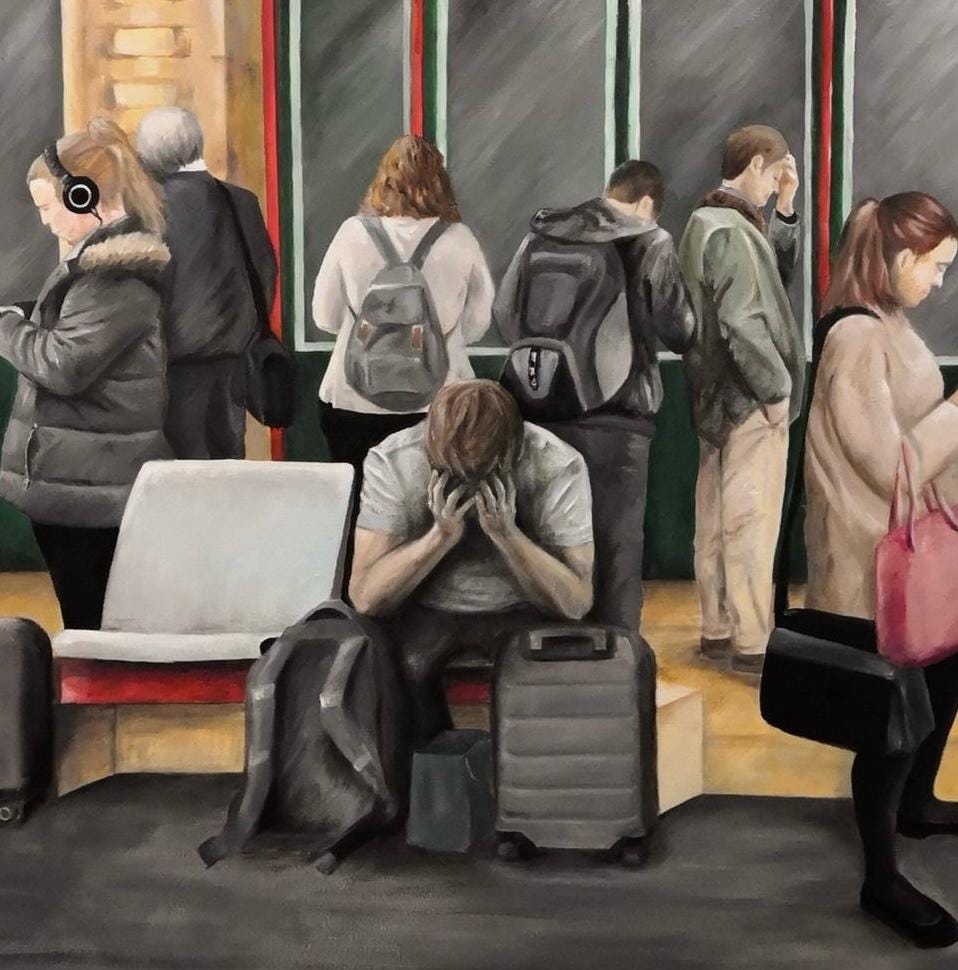
The nervous system may begin to interpret every inconsistency, every micro-expression, every shift in behavior as a threat. This is where sensitivity can slide into hypervigilance. When that happens, being perceptive stops feeling empowering and starts feeling exhausting.
But sensitivity was never meant to absorb everything around us. It was meant to observe.
When those observations are filtered through, sensitivity becomes a tool that supports emotional balance and social clarity rather than draining us. We stay open, but not porous. Connected, but not overwhelmed.
Staying centered is a critical turning point. While empathizing with others and trying to understand their emotions, losing the right dosage can pull us away from ourselves.
When we lose our center, sensitivity can start to harm rather than help.
This is why regulation is essential. Empathy, when unregulated, can turn into self-destruction. But when used with the right balance, it enhances social intelligence, emotional clarity, and grounded presence.

A Different Kind of Strength
What was never the issue was the ability to feel. It was the lack of guidance around it. What we often label as “too sensitive” is usually a nervous system shaped early on. One that learned to notice shifts, inconsistencies, and emotional undercurrents in order to stay safe.
This learned defense mechanism doesn’t disappear with time. It stays, waiting to be understood, rather than suppressed. When left unchecked, this heightened awareness can keep us in survival mode. Everything feels personal. Everything feels urgent.
Once that capacity is guided, it stops working against us and begins to work with us.
What once felt overwhelming turns into clarity. What once drained us becomes connection. With self-awareness, we learn to feel without losing our center. To meet others with empathy, without letting it spill inward. To stay open, without thinning your boundaries.
So the work isn’t about becoming tougher or less affected. It’s about learning how to direct what you already sense. Because when this capacity is held with care and intention, it doesn’t make you fragile. It makes you perceptive, grounded, and quietly strong.
I hope something in what I share here lights up something in you too. Personal growth can feel intense, sometimes even overwhelming: but in the end, none of us are truly alone. If this resonated with you, I hope you carry it gently in your day. And if not, glad you’re here. Because we’re all just learning how to speak our truths more. With warmth, always 🌿
"The nervous system may begin to interpret every inconsistency, every micro-expression, every shift in behavior as a threat. This is where sensitivity can slide into hypervigilance. When that happens, being perceptive stops feeling empowering and starts feeling exhausting."
The automatic nervous system is part of our nervous system and learns to cope with situations in its own way during childhood. Even as adults, we often react automatically in ways that our ANS learned many years ago. If we grew up in an unsafe or emotionally unstable environment, we may react in unhealthy ways that we don't understand. Therefore, we must slowly teach the ANS to relearn proper reactions. This process is similar to fixing a computer program that isn't working properly.
This is such a beautiful reminder of the power of self-awareness and empathy. It resonates deeply with me, and I appreciate the gentle encouragement to stay open and grounded.